
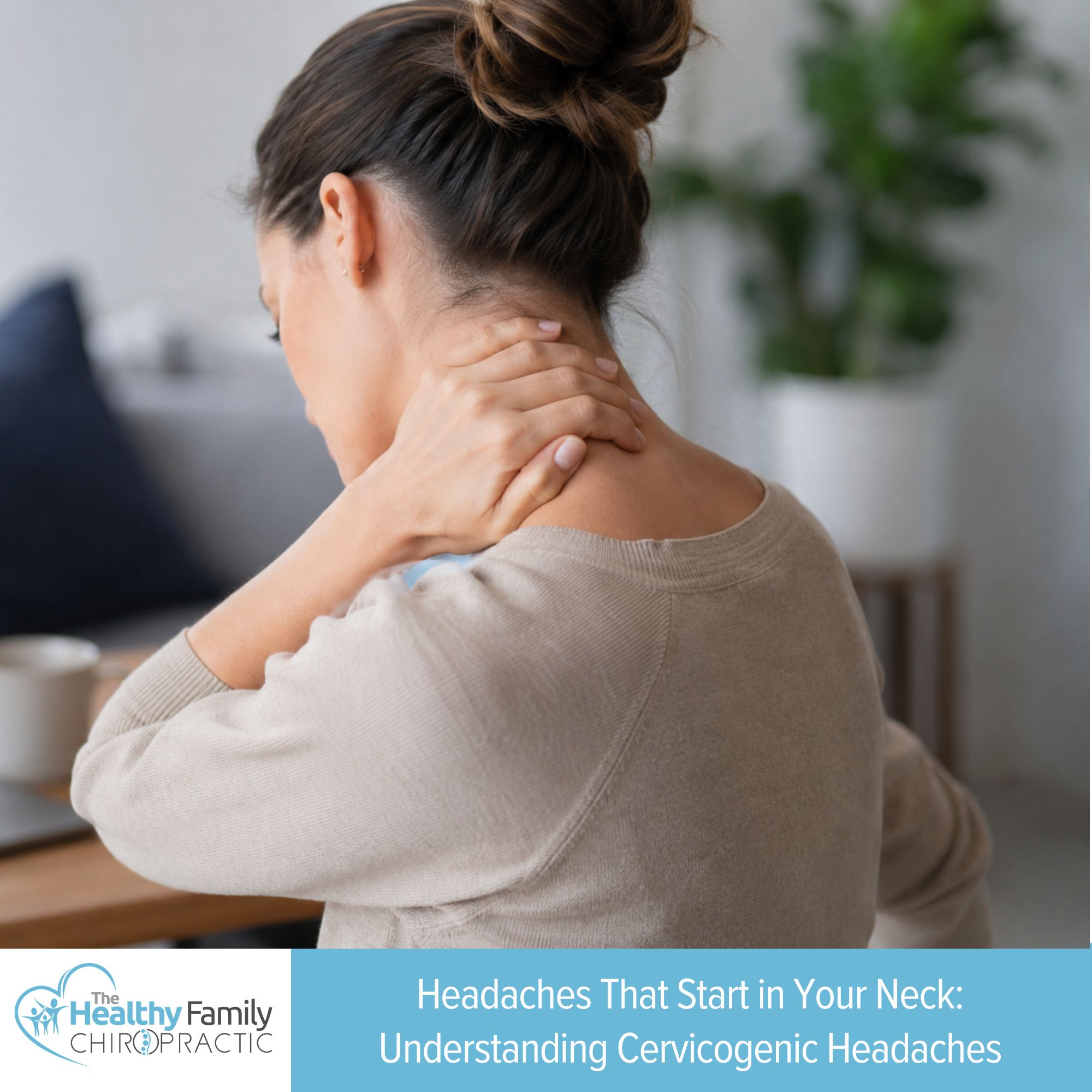
 Headaches are among the most common health concerns affecting people of all ages, but not all headaches begin in the head. Many individuals experience headaches that actually originate from dysfunction in the neck. These are known as cervicogenic headaches, a condition that is frequently misunderstood and often mistaken for migraines or tension headaches. Because the pain is referred from structures in the cervical spine, treating the neck rather than simply masking the symptoms can provide lasting relief.
At The Healthy Family Chiropractic, we help patients identify the true source of their pain through comprehensive chiropractic assessments and personalized care plans. If recurring headaches seem to begin at the base of your skull, worsen with neck movement, or are accompanied by stiffness, chiropractic care can be an effective, non-invasive solution.
What Is a Cervicogenic Headache?
Understanding the Connection Between Your Neck and Your Head
A cervicogenic headache is a secondary headache, meaning it is caused by an underlying problem rather than being a condition on its own. In this case, the pain originates from the joints, muscles, discs, ligaments, or nerves of the cervical spine (neck).
The upper cervical spine shares nerve pathways with structures responsible for sensation in the head and face. When these tissues become irritated or dysfunctional, pain signals can be interpreted by the brain as a headache.
Unlike primary headaches such as migraines, cervicogenic headaches are typically mechanical in nature, meaning movement, posture, or joint dysfunction often triggers symptoms.
Common Symptoms of Cervicogenic Headaches
Recognizing the Signs
People with cervicogenic headaches often experience symptoms that differ from traditional migraines.
Common symptoms include:
- Pain that starts at the base of the skull
- Headache that radiates to the forehead, temples, or behind one eye
- Neck stiffness
- Reduced neck mobility
- Pain that worsens with certain neck movements
- Tenderness in the neck or upper shoulders
- Headaches that consistently occur on one side
- Pain after prolonged computer work or driving
Many patients also report shoulder discomfort, upper back tightness, and limited range of motion.
What Causes Cervicogenic Headaches?
Cervical Joint Dysfunction
The small joints of the upper neck play a critical role in supporting head movement. When these joints lose proper motion due to injury, poor posture, arthritis, or repetitive strain, they can trigger headache pain.
Muscle Tension
Tight muscles in the neck and shoulders frequently contribute to cervicogenic headaches. Muscle imbalances can place abnormal stress on the cervical spine and surrounding nerves.
Poor Posture
Modern lifestyles often involve prolonged sitting, computer work, and frequent smartphone use. Forward head posture increases strain on the upper cervical spine, leading to chronic irritation.
Previous Injuries
Whiplash injuries, sports accidents, falls, or previous trauma can alter spinal mechanics long after the initial injury heals, increasing the risk of recurring headaches.
Degenerative Changes
Age-related degeneration, including osteoarthritis and disc changes, can reduce spinal mobility and contribute to chronic neck-based headaches.
How Cervicogenic Headaches Differ From Migraines
Understanding the Differences
Although symptoms sometimes overlap, cervicogenic headaches have several distinguishing features.
Cervicogenic headaches often:
- Begin in the neck
- Increase with neck movement
- Cause limited neck mobility
- Remain primarily on one side
- Improve when the underlying neck dysfunction is treated
Migraines more commonly involve:
- Throbbing pain
- Sensitivity to light and sound
- Nausea or vomiting
- Visual disturbances or aura
- Head pain not necessarily related to neck movement
Proper diagnosis is essential because treatment strategies differ significantly.
How Chiropractors Evaluate Neck Headaches
Comprehensive Chiropractic Assessment
A thorough chiropractic examination focuses on identifying the root cause of the headache rather than simply treating symptoms.
Your evaluation may include:
- Complete health history
- Review of headache frequency and triggers
- Postural assessment
- Cervical spine mobility testing
- Orthopedic and neurological examinations
- Muscle function evaluation
- Spinal palpation
- Assessment of daily activities and ergonomics
If additional testing or imaging is necessary, appropriate referrals may be recommended.
Chiropractic Care for Cervicogenic Headaches
Restoring Healthy Neck Function
Chiropractic care addresses the mechanical dysfunction contributing to cervicogenic headaches.
Treatment may include:
- Gentle chiropractic spinal adjustments
- Cervical joint mobilization
- Soft tissue therapy
- Trigger point therapy
- Myofascial release
- Stretching exercises
- Corrective exercises
- Postural retraining
- Ergonomic recommendations
Restoring proper movement within the cervical spine often reduces irritation affecting nearby nerves and muscles.
The Role of Posture in Chronic Neck Headaches
Why Forward Head Posture Matters
For every inch the head moves forward from its natural position, the muscles and joints of the neck experience substantially greater mechanical stress.
Poor posture commonly develops from:
- Computer work
- Smartphone use
- Tablet use
- Reading in bed
- Driving
- Poor workstation ergonomics
Over time, these repetitive stresses can contribute to chronic headaches.
Improving posture is often one of the most effective long-term strategies for reducing headache frequency.
Exercises That Help Support Recovery
Improving Neck Stability
Strengthening and stretching exercises complement chiropractic care by improving muscular balance.
Depending on your condition, recommendations may include:
- Chin tuck exercises
- Deep neck flexor strengthening
- Shoulder blade stabilization
- Upper trapezius stretching
- Levator scapulae stretching
- Thoracic mobility exercises
- Core strengthening
Exercises should always be individualized based on your examination findings.
Lifestyle Changes That Can Reduce Headaches
Healthy Habits That Support Healing
Small daily habits can significantly reduce strain on the cervical spine.
Helpful strategies include:
- Taking regular movement breaks
- Adjusting monitor height
- Supporting your neck during sleep
- Maintaining good hydration
- Managing stress
- Using supportive pillows
- Performing daily stretching
- Avoiding prolonged forward head posture
Combining these strategies with chiropractic care often provides the best long-term outcomes.
When Should You Seek Professional Care?
Warning Signs That Should Not Be Ignored
Occasional headaches are common, but persistent or worsening symptoms deserve evaluation.
Schedule an assessment if you experience:
- Frequent headaches that begin in your neck
- Headaches after an accident
- Neck pain with recurring headaches
- Reduced neck movement
- Pain lasting several weeks
- Headaches interfering with work or sleep
- Increasing headache frequency
- Limited relief from medication
Immediate medical attention is recommended for sudden, severe headaches accompanied by neurological symptoms such as weakness, confusion, loss of consciousness, difficulty speaking, fever, or vision changes.
Why Choose Chiropractic Care for Headache Treatment?
Addressing the Root Cause
Pain medications often provide temporary symptom relief without correcting the underlying dysfunction responsible for recurring headaches.
Chiropractic care focuses on:
- Improving spinal mobility
- Reducing joint irritation
- Decreasing muscle tension
- Restoring healthy posture
- Supporting nervous system function
- Improving movement patterns
- Helping reduce headache recurrence
For many patients with cervicogenic headaches, treating the neck directly provides more meaningful and lasting improvement than simply managing symptoms alone.
Frequently Asked Questions
Can a chiropractor help headaches that start in the neck?
Yes. Chiropractors evaluate spinal mechanics, posture, muscle function, and joint mobility to identify dysfunction contributing to cervicogenic headaches. Treatment focuses on correcting these underlying issues rather than masking pain.
What causes neck headaches?
Neck headaches commonly result from joint dysfunction, muscle tension, poor posture, whiplash injuries, arthritis, or repetitive strain affecting the cervical spine.
Are cervicogenic headaches the same as migraines?
No. Cervicogenic headaches originate from structures in the neck, while migraines are a neurological condition with different causes and treatment approaches.
Can poor posture cause headaches?
Yes. Forward head posture places additional stress on the muscles and joints of the neck, making posture one of the most common contributors to cervicogenic headaches.
How long does chiropractic treatment take to work?
Every patient is different. Some individuals notice improvement within a few visits, while others with longstanding conditions require a more comprehensive treatment plan depending on the severity and duration of symptoms.
Is chiropractic care safe for headache treatment?
Chiropractic care is considered a safe, conservative treatment option when performed by a licensed chiropractor following an appropriate clinical examination.
Can stress contribute to neck headaches?
Yes. Stress often increases muscle tension throughout the neck and shoulders, which can worsen cervicogenic headaches.
Will exercises help prevent headaches?
Yes. Strengthening the muscles that support the neck, improving posture, and maintaining flexibility can reduce mechanical stress that contributes to headaches.
Can sleeping position affect headaches?
Absolutely. Poor pillow support or awkward sleeping positions can strain the cervical spine and contribute to morning headaches.
When should I see a chiropractor for headaches?
If headaches repeatedly begin in your neck, occur alongside neck pain or stiffness, worsen with movement, or interfere with your daily activities, a chiropractic evaluation can help determine whether cervicogenic headaches are the cause.
Contact Information
The Healthy Family Chiropractic
850 Main St E
Milton, ON L9T 0J4
Phone: (905) 864-1516
Website: thehealthyfamily.ca